Soft Enamel vs. Hard Enamel Pins: Key Differences
Surface feel, durability, detail rendering and cost — how to pick between the two processes.
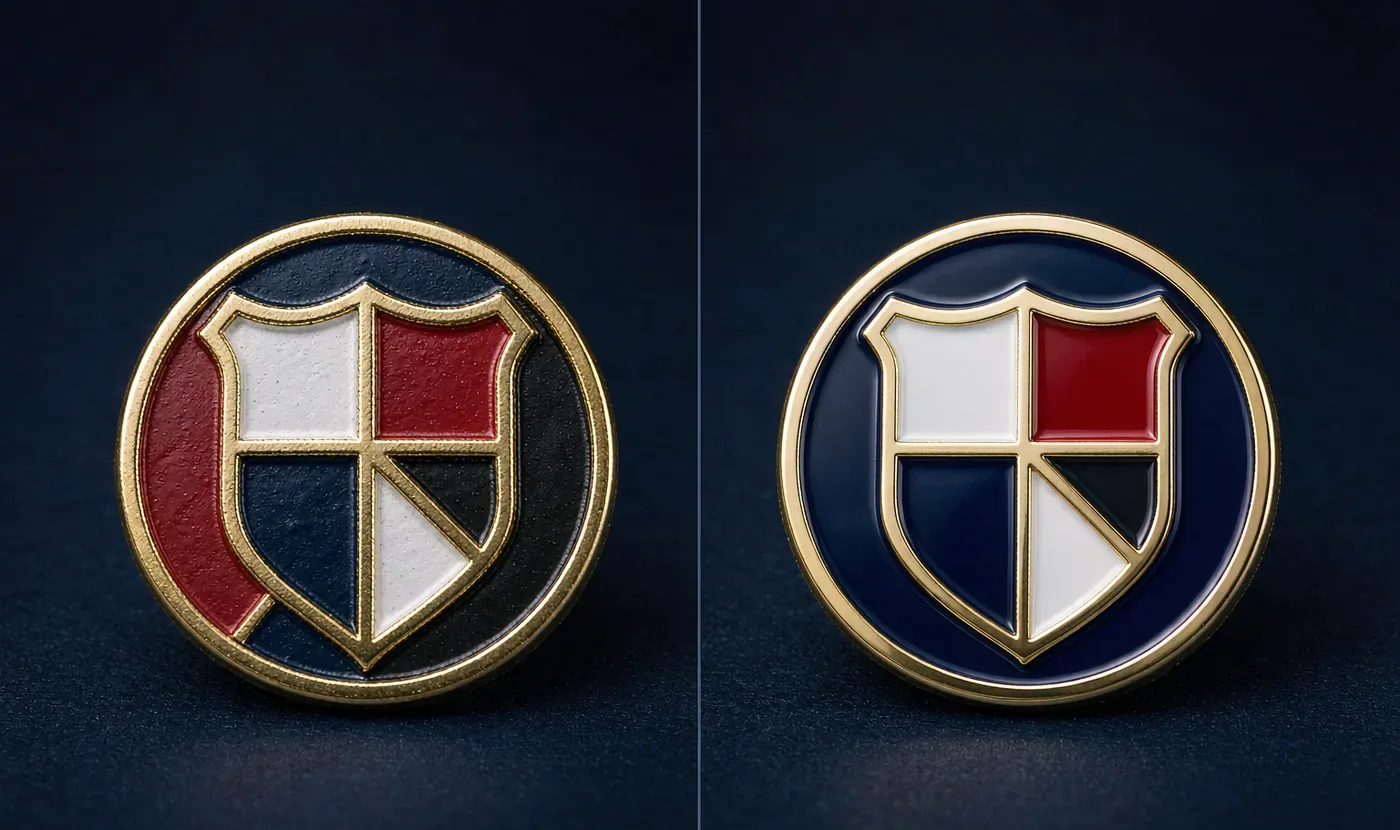
Soft enamel and hard enamel use the same die and the same metal base — the difference is what happens to the color after filling.
How Each Process Works
Soft enamel: color is filled into the recessed areas and left to cure below the metal surface, leaving raised metal lines you can feel. Hard enamel: the recesses are overfilled, then ground and polished until the color is flush with the metal, creating one smooth surface.
Appearance and Feel
Soft enamel looks dimensional and catches light differently on lines and colors — good for bold, graphic designs. Hard enamel looks smooth and jewelry-like — better for refined corporate designs and text-heavy artwork.
Durability
Hard enamel is more scratch-resistant because the color is polished solid. Soft enamel can be protected with an epoxy dome coating, which adds gloss and a slight magnifying effect on fine detail.
Detail and Color
Both processes handle similar color counts. For gradients or photographic shading, printed color on polished metal is usually the better route for either process.
Cost
Hard enamel requires extra polishing steps, so unit cost is typically higher. For large promotional runs where cost per piece matters most, soft enamel (or epoxy-coated soft enamel) is the common choice. For club badges, corporate identity and commemorative pieces, hard enamel’s finish usually justifies the difference.
Quick Decision Guide
- Bold design, budget-driven, promotional → soft enamel
- Premium look, fine text, jewelry feel → hard enamel
- Gradient or photo artwork → printed color
- Want soft enamel but glossy and protected → soft enamel + epoxy dome
Related Products
Ready to Start Your Custom Project?
Send us your product idea, reference artwork and estimated quantity. We will confirm the specifications and provide a quotation.